
.webp)
The studio and the stage are two different rooms
In the studio you have a mirror, a teacher, and the freedom to stop. On stage you have lights in your eyes, an audience you cannot see, and no second take. Most performance nerves come from treating these two rooms as if they were the same.
Our job in the last month before a show is to make the studio feel more like the stage, a little more every week, so that opening night feels familiar instead of foreign.
Take the mirror away early
Mirrors are useful for learning shapes, but they teach you to watch yourself instead of feeling yourself. Three weeks before a performance we turn the class away from the mirror and never turn back.
For the first few sessions it feels uncomfortable. Then something shifts: dancers start trusting their bodies and each other, and their spacing actually gets better, because they are finally paying attention to the room.

Run it full out, every time
Marking the choreography saves energy, but it also hides problems. A lift that works at half speed may fail at full speed. From week three onwards, every run is performed at show energy, with costumes and shoes whenever possible.
Practice makes you ready. Performance makes you brave. You need both, and you cannot skip either one.
Plan the first eight counts
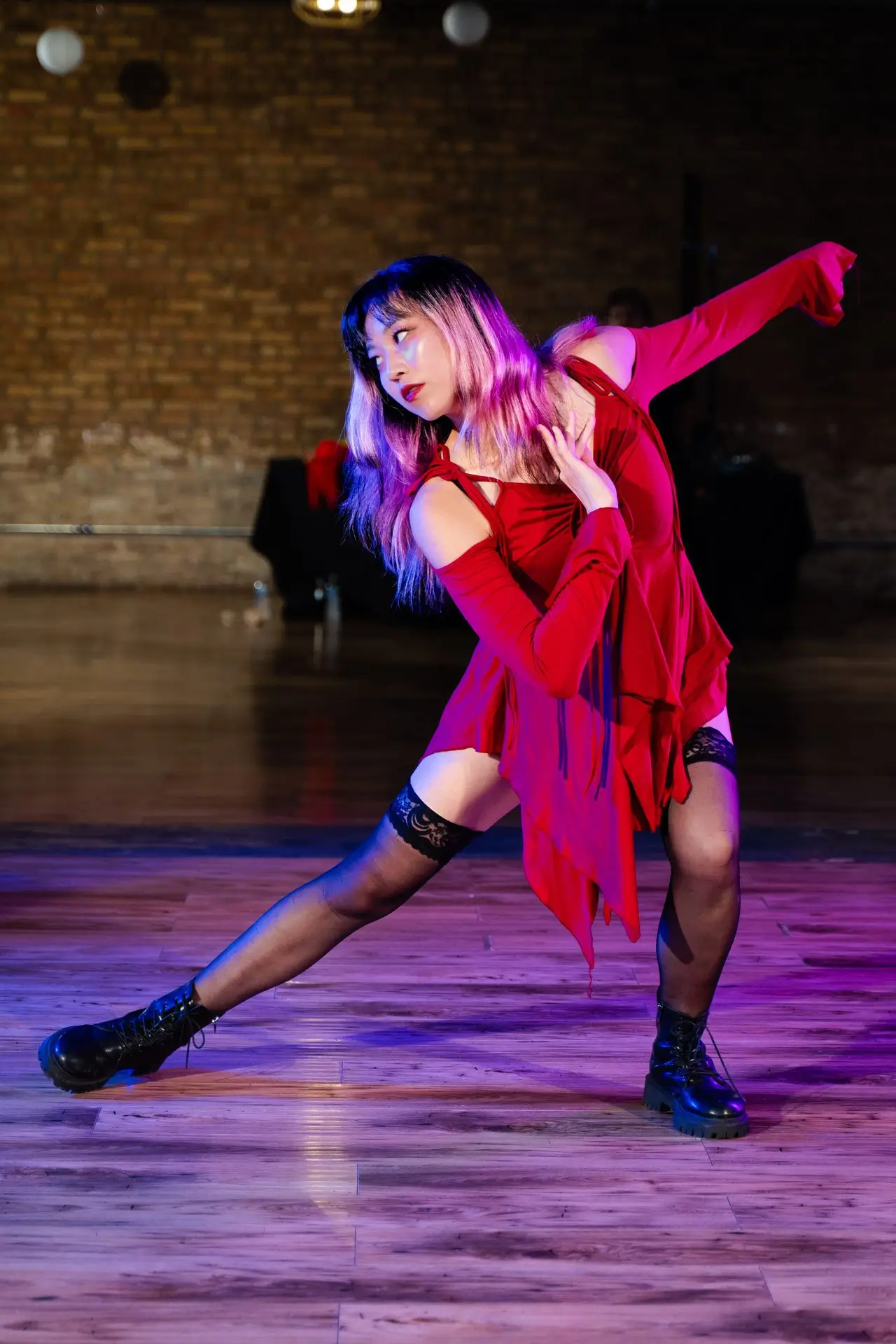
The hardest moment of any show is the very first step. We rehearse the entrance and the opening eight counts more than any other part of the piece, so that when the lights come up, your body starts before your nerves do.
.webp)
.webp)





.webp)

.webp)

.webp)

Come take the floor, everyone!
Book a free trial class, or brief us on your event. Either way, the first conversation costs nothing.
.webp)